The wind was still blowing hard when we reached Russian Mission. It had created waves big enough to wash over the kayak. Despite the spray cover, a considerable amount of water had gotten into the kayak. My folding kayak has a zipper on the front deck and the back deck to enable one to get the frame into the skin. The zippers are covered by a Velcro flap but I think it is not watertight and that's probably where the water came in.
I came to a stop on the wide, gently sloped beach and stepped out while holding the kayak with my left hand. Because I was so tired from the all-night paddle and being dreadfully malnourished from not having eaten anything since 10:00 pm of the previous day, I felt like I was still in the kayak—rockin' and a rollin'. I lost my balance and fell backwards into the river. Trying to brace myself against the kayak to be able to get back up, I pushed one side of the kayak down into the water. That clever maneuver added several more gallons of water to what was in the kayak already.
I let go of the kayak and scrambled up and out of the water only to lose my balance once again. I sat back down into the river again. Just in case anyone had missed my antics, I repeated the whole act one more time. And Kenneth, my good, ol’ paddling partner? As I was thrashing around in the water, wondering why he couldn't at least steady the kayak, he just stood there watching my performance and laughed uncontrollably.
Finally I managed to remain upright. I pulled the kayak up the beach and sloshed off to find the post office and Esther, the postmaster. The water continued to drain out of my raincoat pockets and the legs of my rain pants as I slogged up the road.
| The post office was gone! It was not where it had been in '99. I asked a guy going by on his four-wheeler about the post office. He told me where it was and gave me a ride there. Esther was running the show inside. It was good to see her again. As she and I talked (with water dripping to the floor from my clothes, forming a large puddle), Harvey drove up on his four-wheeler. He invited Kenneth and me to their home for lunch, for supper and to stay overnight in their place instead of on the beach by the river. It all sounded good to me. |  The street in front of Harvey’s house, up on the bluff away from the river, in Russian Mission, “New Town.” © Kenneth Urnes |
We went back to the river to get Kenneth, our gear and the kayaks. All of it was quickly loaded into the small trailer pulled by Harvey's four-wheeler. Before going to his house, Harvey took the kayaks to an empty building he owned and we put them inside for safekeeping. The door was secured with a padlock.
A lot of my things had gotten wet as I had played around in the water, so while Kenneth showered I hung my things where I could, to dry them. When I finished my shower, Harvey treated us to snacks of dried salmon strips, pieces of bear meat, black duck soup and freshly canned salmon. When I had fortified myself with generous helpings of food, and felt strong enough again, I went to the grocery store to do some shopping. I also needed batteries for my camera. When I got back, Esther was home and in the kitchen cooking a moose roast for supper.
Clockwise from the right: Esther, Nathan, Stephan and Harvey – the Yupik Eskimo family who fed and sheltered us in their home. © Ray Zvirbulis | Through some phone calls to Harvey, before I left for the Yukon trip, I had thought Esther and Harvey had had a baby girl. Maija knit a pink scarf and hat for the little girl. I gave the presents to Esther and she had a good laugh. They had had a boy, Nathan, and he was already three years old. Esther said she would frame them and put them on the wall. I called Maija and Esther then told her about Nathan, the "baby girl." Their older son wanted to talk to Maija because he remembered her when Maija and I had spent a day and night with them before we left on our attempt to kayak from Russian Mission to the Bering Sea. Steven asked Maija why she hadn’t come along with me again. I think Maija said something like, "I am not crazy." |
Esther's supper was great. Lots of moose meat, rice, cookies, milk and vegetables. Kenneth and I gorged ourselves shamelessly. Harvey even put out more salmon strips when supper was done. He sure knows how to make them. They are not tough and leather-like as some of the salmon strips other people had given us. Harvey's were definitely the best I had eaten.
After a good night's sleep, I woke up early the next morning and joined Harvey and Esther in the kitchen for a breakfast of cereal and milk, something I had not eaten since leaving Show Low.
| After Esther left for work at 8:30, Harvey, Kenneth, Steven and Nathan took the boat out to Harvey's fish camp. I stayed back, read the lesson, called Maija (used my calling card). Maija was happy to hear that I was spending a rest day at Harvey and Esther's, waiting out the hard weather. The wind had seemed to be near gale force, shoving the Yukon's water back upstream. There were huge waves out on the river. |

Left to right: Ray, Nathan and Stephen. © Ray Zvirbulis |
Soon, Harvey and the crew came back from the fish camp and brought about 50 pounds of dried fish. Right away Harvey called Esther at the post office and said she should come home at noon and take the rest of the day off so she could cut up the fish. I thought Harvey could have done it but I guess the job requires a supervisor and a laborer. Anyway, I was a guest who greatly appreciated their hospitality and figured it was none of my business how dried salmon needs to be cut and packaged. Esther came home at noon, made soup and piles of grilled cheese sandwiches, made coffee and put salmon strips on the table while Harvey sat and supervised. He did a good job. Esther began to cut up the fish after lunch while Kenneth made himself useful by washing the dishes.
 Russian Orthodox Church at Russian Mission, long abandoned. © Ray Zvirbulis |
I went to the post office to mail some letters and a box of things home I did not need anymore. My next stop was one of the two grocery stores and bought two, one pound bags of Starbucks coffee for Harvey and Esther. One pound of Italian Roast and another pound of Regular Roast. For myself, for being such a good guy, I bought an ice cream bar, a dark chocolate bar and a Dr. Pepper. The dark chocolate bar had been on the shelf for a long time – it was nearly dried out, but good. |
| While at the store I talked to the owner, Andrew Stephanoff, the person who had given me the ride to the post office. He told me about a couple of German canoeists going down the Yukon a week or so before I got there. The wind had sprung up, howling through the countryside. Because the wind was blowing so hard, they had decided to play it safe and set up camp. But the wind blew one of their canoes out onto the river where the waves were extremely high. When the two went out in the remaining canoe to bring back the wayward one, the wind overcame them and blew them across the river. There the canoe hit a log close to the bank and the waves rolled them over. Andrew was passing by in his motor boat but was afraid to stop and rescue them for fear of being capsized himself. When he got back to Russian Mission he notified a rescue team that there were a couple of people in distress out on the river, still in the water, clinging to a log. The rescue crew could not leave for a couple of hours due to the wind and the waves. Eventually they did reach the two people. They were just about to give up and go under. When they were brought back to the village with their remaining gear, they sold it all and flew out, heading back to Germany. |  Close up of image on the cross at the church. © Ray Zvirbulis |
On the way to the store I stopped to talk to one of the locals. He said he had been on the river bank when he saw Kenneth and me crossing a wide bend in the river (we had decided to cut across rather than follow the river bank—a safer but longer passage). He said to his fishing partner, "Look at those two guys! I hope they make it." He was very concerned about our safety. On the other hand I thought we were doing real well, despite the wind and waves.
Back at Esther and Harvey's we had another great supper—more salmon and moose. They sure were generous with their food. I was not going to go hungry at their house. Later in the evening Harvey said he had an uncle who lived by himself about 30 miles downstream. He added that if we were worn out by the wind, we could probably spend a night with the uncle whose name was Charlie Boots. Harvey also said he would contact Charlie on his radio to check on the weather downstream.
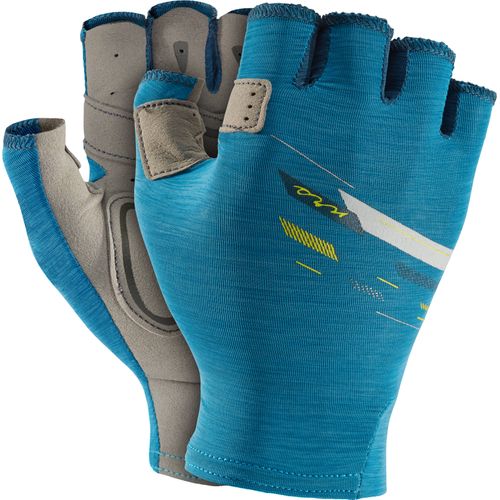
We left Esther, Harvey and the boys at noon, paddling the first hour or so in the protection of islands strung along the shoreline. Because the wind was blowing so coldly, I wore my NRS Reactor Gloves. Though the wind was still blowing hard and reaching us, the waves were not as high behind the islands. Harvey had been able to reach his uncle, Charlie Boots, to check the river conditions downstream. Charlie had told him that the river was still rough but that the wind had subsided somewhat.
After we left the protection of the islands behind us, we emerged on the river proper. The wind kicked us in the teeth for trying to hide behind the islands' bushes. According to Kenneth, who has paddled the fjords in Norway, other Alaskan rivers and in the Kamchatka, the waves on the river were five to six feet high. We hugged the shoreline as closely as we safely could, for the shoreline was rocky with sheer cliff faces dropping down into the river. We had been warned to watch out for the rocks jutting out into the river, especially at the points where the river curved sharply to the right as we made our way downstream. The waves there were particularly treacherous, high and unpredictable. At one of those places it became so bad that I was afraid to turn my head to see how Kenneth was doing, because he was behind me and losing ground. I prayed he would not capsize because it would have been dangerous for me to make a turn and get back to him. Nevertheless, I began to plan how I would get to him if the need arose.
Once I was around that awful point, I looked back to check on Kenneth and was relieved to see that he too, had made it safely through those waters. I also noticed that he too had been intimidated by the rough water. He had finally put on his life jacket for the first time on that trip. I thought to myself, "This must be much worse than I had thought." Fortunately the worst of the waves were out in the middle of the river where the wind did as it wanted on the open water.
In spite of the fact that the water and wind were somewhat calmer, a verse from Isaiah kept running through my head, "Fear thou not for I am with thee: be not dismayed; for I am thy God." Right on the heels of that verse came," When thou passest through the waters, I will be with thee; and through the rivers, they shall not overflow thee." Those verses kept me from succumbing to fear which in turn kept me calm and clear-headed.
After paddling close to 30 miles we came to Charlie Boots' camp/homestead; he lived there year-round by himself. He is a small, wiry 75-year-old man, tough as the Alaskan wilderness.
We turned our kayaks to face upstream and paddled slowly to stay abreast of the cabin. I yelled and yelled asking if anyone was home. I did not want to get out of the kayak because there were five dogs of varying sizes watching us warily. At last Charlie came out and when he was at the river I asked if we could stay in one of his cabins. I had told him we were the two guys who had stayed with Esther and Harvey in Russian Mission. Well, Charlie said we had to stay in his cabin with him; all he had to do was move some stuff.
 Charlie Boot’s cabin – tight, warm and dry. © Kenneth Urnes |
The cabin had an anteroom piled high with things. Three rifles leaned in one of the spaces by the inner door. Stepping through the second doorway, we were in a room about 10 x 20 feet in size. At the back was his raised bed with things stuffed underneath. Both walls were crowded with stuff stacked on stuff. On one shelf was his radio. A light bulb hung from the ceiling. Charlie had a generator behind the cabin to light the bulb and work his radio which he operated every day for a few minutes. By the inner door, Charlie had a pot-bellied stove he used for heat and for cooking. |
When I saw how small the room was and how little space there was I thought about sleeping in the fish house. However, since there was a dirt floor, I would have had to lay down the tarp. Kenneth and I opted for the floor in Charlie's cabin. We helped him move some things and soon had a space big enough for us to stretch out on.
While we carried a few of our things up from the river, Charlie fired up his stove. I gasped as I came in to the room. The temperature seemed to have jumped close to 90 degrees. What a change from the 50 degrees outside. Soon I was down to a T-shirt and pants. My wet gear was hanging from lines strung across the cabin. We were happy to be inside the hot cabin and not outside like the three kayakers we had seen at a fish camp a few miles from Russian Mission. I had talked to them back in Russian Mission as they were getting ready to leave the day before. The man told me he was from Wyoming and the two girls were from Juneau. The wind had apparently driven them ashore.
As we were arranging our things, Charlie cooked a bowl of Ramen noodle soup for all of us. I made a pot of red beans and corned beef and hash. Kenneth contributed a can of chili. The three of us had a nutritious, but peculiar, concoction for our supper. As we ate that peculiar pot of food, Charlie went out to his anteroom and brought back a can of Pepsi for each of us to make sure we could get the meal down to where it belonged. I was so hungry that I did not need the Pepsi as a lubricant. But, I drank it anyway and thanked Charlie for it.
| Charlie told us he had lived in that small cabin since 2000 when he had built it. He thought the cabin was getting to be too small and so was in the process of building a bigger one. He had most of the logs cut and prepared already. As he talked, Charlie said his wife had passed away in October of 2000. He had her death certificate framed and fixed to the wall above his bed. He also showed us photos of himself and the previous governor of Alaska. The man, while governor, had been on a trip around Alaska and had stopped at Charlie's cabin for rest, a meal and a photo op. | 
Charlie Boots in his warm cabin. © Kenneth Urnes |
One of the more intriguing things Charlie shared with us was an incident he had experienced while going down the river to Marshall in his boat. The motor died but he managed to get the boat to shore. After tying it up securely, he began walking to the village of Marshall, miles and miles downstream. No trails, no paths—he was going crosscountry. He said it took him three days and two nights… two nights when he just slept on the ground in the forest. Charlie added that he had no food those three days and drank water from small streams. The mosquitoes were thick as clouds but did not bother him.
A day or two after he had begun walking, Charlie "saw" many people whom he had never seen along the river before. He said they were Eskimo and had skin boats but strangely, none of them ever spoke to him. Charlie said he threw a stick at one of the boats to attract their attention but the stick landed in the mud.
"It was very strange." The people just looked but never spoke to him. Farther along, but not far from the skin boats, he "saw" some people in a cabin, threw a stick at the house to attract their attention but the stick landed on the ground and did not hit the house. "It was very strange." The people, Eskimo, just stared and said nothing to Charlie.
Charlie then picked up a large piece of glass and could see the reflection of one of the Eskimo in it. Standing beside the Eskimo, Charlie also saw himself reflected in the piece of glass. When he picked up a smaller piece of glass, neither the Eskimo nor he could be seen reflected in the glass. "It was very strange."
In the same area he saw a man sitting on a log. Charlie leaned his rifle against a tree and walked toward the man. When he got to the log, the man was gone. So, he went back to get his rifle and when he got to the tree, the rifle was gone also. He could not understand it. "It was very strange."
Charlie ended his account of the incident by saying that he had never seen that many people along the river. In my head I speculated that perhaps lack of food and walking for three days just may have had something to do with seeing that many people along the river.
After supper I wanted to wash the dishes but Charlie refused to let me. When the dishes were done, he finished clearing the floor and then sprayed some sort of deodorizer on the floor saying, "The puppies had soiled the floor." There were three of them in the cabin when we had come in. Charlie put them all out with the other dogs. Next he put down a new tarp and then brought in an air mattress and a bicycle pump (because he could not find the foot pump) to inflate the mattress. On top of the mattress he spread a blanket his wife had crocheted.
When all that was done and ready for the sleeping bags, Kenneth went out to his kayak to get something. Soon he called me out. Passing by were three people from England. They had set out from Whitehorse ten days before Kenneth had. They were doing the trip to the Bering Sea to raise money for some charity back home. The trio had also left Russian Mission on the day we had arrived. While we rested the extra day at Harvey's house, they tried to paddle but the wind was just blowing too hard. They had taken refuge by one of the sloughs to wait out the wind in camp.
It took us a while to get up the next morning because thirty minutes after we lay down, the air mattress had exhaled and had forgotten to inhale. It was as flat as the tarp. Charlie had also said he would not bother us at night because he does not get up. But I counted three times when he got up to go to the outhouse. Maybe he was just going out to talk to the Eskimo. I don't know.
Charlie's dogs had gotten used to us. One of them even followed me out to the outhouse. I had to close and lock the door to keep it out. The whole pack followed us down to the river as we carried our gear to the kayaks. One of the dogs had been badly burned and had kept its distance until that morning. It then finally joined the escort pack.
Charlie said he had been boiling salmon for the dogs because they don't like raw salmon. The dog had gotten too close to the boiling pot (it must have been hungrier than the others) and caught on fire. Thinking quickly, Charlie grabbed the dog and holding it at arms length, ran to the river and threw it in. (I will not say anything about hot dogs at this point but will let the reader come up with lame joke him/herself.) The poor dog had raw places on about a third of its body. But the mental trauma must have been far worse. First, its master tries to fry it and then tries to drown it. What next? Could any dog trust its master after an experience such as that? I asked Charlie if it would not have been more humane and kinder to shoot the dog, to put it out of its misery. But Charlie said he just could not bring himself to do that to one of his beloved dogs.
 Ray drifting along below Charlie’s place – T-shirt time. © Kenneth Urnes |
By 10:00 we were packed and on the river. Charlie tried to make us take a canister of Kool-Aid as we said goodbye. I told him I had a lot of powdered energy drink and would not be able to drink that much Kool-Aid. He tried to give us more of his food but we had to keep turning him down. I think Charlie just liked having company and did not want us to leave so soon. It was hard to refuse Charlie's gifts. |
I think I saw a group of Eskimo standing some distance behind Charlie as I paddled away. Probably there to protect and look after him.
Ray Zvirbulis
Show Low, Arizona