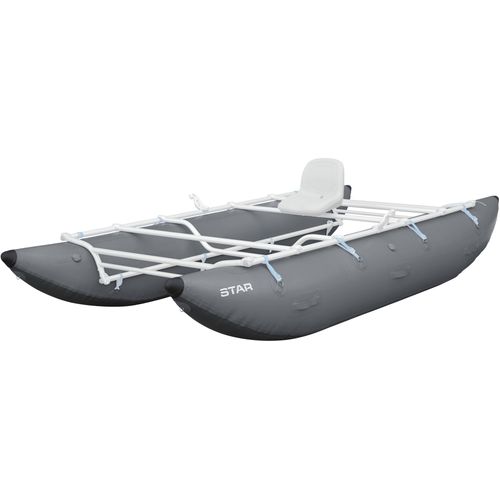
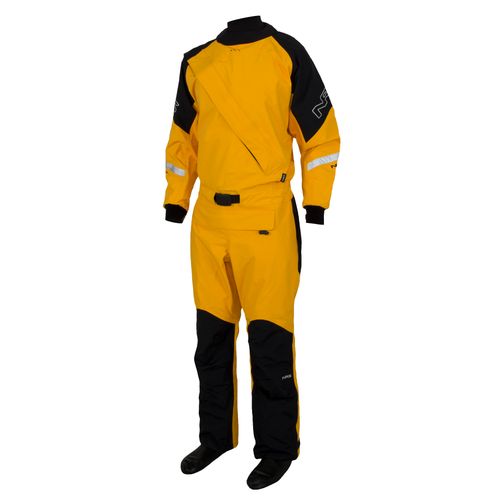
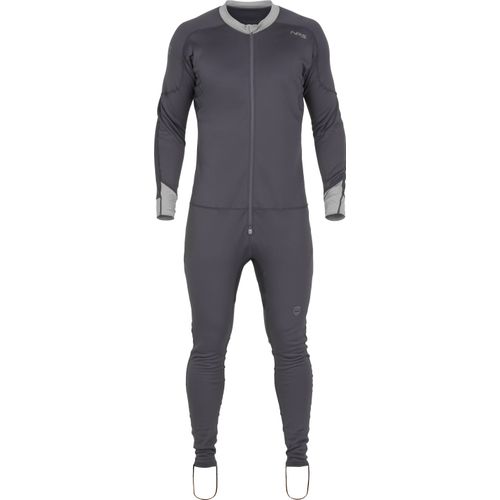
When we left off at the end of the first part of this story, Cold Days in Hells, the rest of the crew was driving up the steep road out of Pittsburgh Landing, looking down at the black wall of weather coming upriver and figuring I was going to get pounded by it. But before I spin the tale of this second part of the trip, let me address the fact that I was out there on the water by myself. Even some of the folks here at NRS fussed at me about going it solo. I’m no daredevil; rather I’m a very conservative boater. My decision on the safety of boating this stretch alone was based on: 1) I was in a large boat; 2) I was covered head to toe in cutting edge cold water boating gear; 3) the rapids on this stretch are Class II, in some flows a Class III or two; 4) I’ve been down it several times and am very familiar with it; 5) it’s not remote country, there’s a large outfitter camp, several ranch headquarters, numerous cabins and maybe some jet boat fishermen and last but certainly not least, I was packing the company ACR Personal Locator Beacon. Would it be safer to go with other boats? Possibly. Would it have been safer for me to leave the river with the rest of the crew? Not necessarily. For years, when folks new to boating were going with me on a trip, they often asked, “Is it going to be dangerous?” My answer was always, “Yes, there’s some danger in being on the river. However, statistically speaking, you’re in more danger on the drive to and from the river than you are on the water.” But then, of course, I had to go and prove my point. Shortly after leaving the take-out after a Main Salmon trip, the pickup I was riding in had a head-on collision with a three-ton farm truck. The incident is probably the closest I’ve come to serious injury or death in over 30-years of boating. We were fortunate the truck hit us squarely and the big winch on the front of the truck buried itself in our radiator. Had it sideswiped us, we’d have been rolled down a 40-foot embankment into the river. Our right front tire ended up one foot from the edge. So please don’t read this story and come away with the impression that NRS says boating by yourself is okay. Simply put, Clyde, who happens to work for NRS, feels comfortable boating the stretch of the Snake River from Pittsburgh Landing to Heller Bar by himself and takes personal responsibility for that decision. ‘Nuf said. Back to the story. And, yes, they were right, I did hit the big black weather wall, or rather it hit me. The wind was blowing the rain horizontally with enough force to sting exposed skin and to ruffle the water surface. I turned my back to it and kept on rowing. Fortunately, the higher water flow allowed me to still make some progress rather than be blown back up stream. The worst of the squall lasted 20 to 30 minutes, then the wind died and the rain tapered off. By 4:00 the clouds had thinned and there was even some sun, so I decided to grab a beach and try to dry out my tent and sleeping gear. I found a beach a little over nine miles down from Pittsburgh, on the Idaho side, with no hillside to block the sun. Of course by the time I got my gear unpacked, the sun had retreated behind the clouds. Still, there was a breeze, so I took the tent rainfly and my bedding up to some hackberry tree “clotheslines.”
By the time I finished eating, it started to sprinkle, so I raced up and retrieved my gear off the hackberry trees before it got wet again. With no one to visit with and being too lazy to put up the River Wing, I turned in early. I’d brought along a couple of books, so read for a while by lantern light. Looking back at what I wrote on my last solo trip down this stretch, in Why Am I an Outdoors Person?, that time I brought the memoir of a WWII German colonel to read. This time, both books were of a spiritual nature. In this time of war, economic chaos and political dissent, like a lot of people I’m looking for ways to make sense of it all, or at least my place in it.
I read, it sprinkled, I packed. As I left the beach at 10:30, a canyon wren serenaded me on my way. Even in this cold weather, an insect hatch was occurring and dozens of swallows were swooping and skimming all around me. Crows cawed from the hackberries and many other bird songs twittered from the trees and bushes. Spring is surely coming. Six mule deer objected to my presence and slipped back up a brushy draw. Near the ranch at Dry Creek a man was hauling a huge round hay bale on the front forks of a tractor, along a road paralleling the river. First I pulled ahead, then he caught up and passed me. The current picked up and I left him and signs of civilization behind, except for the occasional fence line. On past Dug Bar where there is road access and a primitive boat launch. Here in the spring of 1877, Nez Perce bands crossed the river safely with all their possessions, horses and cattle during a full spring flood. They were defying the U.S. government order to go to a reservation. Chief Joseph led his people on an amazing 1,800-mile flight that ended in Montana, 50 miles from the Canadian border. Warm Springs Rapid had a bottom wave that slapped the raft around and got my attention. I met the mail boat and we waved to each other. Yes, the U.S. Mails gets delivered, all the way up to Sheep Creek, by jet boat; one of the sweetest mail routes in the nation. I pulled into a beach for lunch. Before leaving camp I had filled my thermos with hot water. I rehydrated a spicy noodle bowl, made hot cocoa and drove the chill away. Rowing through the afternoon I thought how mentally relaxing rowing is. It becomes an automatic motion that doesn’t require thought. Muscle memory applies more or less force to each oar to guide the boat on the path the eye selects. In a long stretch of flattish water, thought fades and a sort of meditative state sets in. It’s one reason I sometimes like to row by myself or with companions that aren’t too chatty. As I slipped along, trying to choose the parts of the river with the most current, I began to feel tired. The day was overcast and cold. From time to time the wind blew and spat cold rain. I adjusted my internal temperature by doffing and donning my Mystery Sea Hood and switching between Reactor Gloves and Guide Gloves. Then the thought came to me, ‘Tomorrow may be a better day. If I put in a long day today, I can carve out a layover day!’ Reenergized, I pushed on. Down past the mouth of the Salmon River. It’s Monday and no jet boats. Push on, past Cherry, Jim, Cottonwood and Cougar Creeks. Then the Cochran Islands come into view. It’s been years since I visited Coon Hollow, this should be an interesting place to explore.
It sprinkled during the night and I slept in. Up to find the river level had dropped and beached the raft. Coffee, wholegrain bagel with cream cheese and some instant oatmeal. The clouds broke and there was Sun, Sun, glorious Sun!...for fifteen minutes. Still, it’s not raining, for which I am grateful. I hiked up to Coon Hollow. There’s an old cabin that boaters have turned into a “museum” of sorts with items they’ve hauled in and flotsam that has floated into the eddy. It’s an interesting piece of Hells Canyon history.
It started to rain again. Layers of wool and fleece kept me warm. My river splashwear kept me dry. The cool rain on my hands and face felt good. The whistle of wind, faint murmur of the river and patter of rain on my hood was my sound track, with occasional counterpoint of birdsong. I closed my eyes and soon retreated from conscious thought. My lengthy reverie was only finally interrupted by the urge to pee.
The right path led to the old sheep shearing shed left over from the days when large flocks of sheep grazed these hillsides. Diseases of domestic sheep have spread to the wild bighorn sheep populations, so the domestic variety is now banned from Hells Canyon National Recreation Area (HCNRA). Many a woolie was stripped of its winter coat in this big shed. It was raining off and on as I turned back to camp.
Crackers, salami, cheese and fruit for lunch. Brief bouts of sun, but rain drove me to the tent where I read, napped and read. Restless, I went out into the weather and tried to move the boat. No go. If the water doesn’t come up by morning, I’ll have to mostly unload it to move it to the water. Hard rain sent me back to the tent for more reading. The rain finally stopped and it began to clear. I heated up Paco’s leftover chili and some of the cornbread, washed it down with some mint tea. After being cooped up in the tent, I felt like a walk. I headed downstream into the dusk and soon found an old road. It led past the shearing shed and gently up and down above the river. A mile or so below camp I topped a rise to see the near lights of the Cache Creek HCNRA Administrative Site, near the Oregon, Washington state lines, that’s manned by volunteers. I turned around and strolled back. The clouds had vanished and the almost full moon was all the light I had or needed. Only an occasional river whisper broke the utter silence. So totally peaceful. I checked the boat before I went to bed; still aground. I awoke cold in the night and had to pull on another layer and wool cap. In the morning, the reason was obvious. The clear night sky brought a hard freeze. Every puddle was frozen solid. But, hurrah, the boat was floating! More coffee and breakfast burritos, then packing up to leave. Gads! The water is dropping again. I managed to horse it back in the water but by the time I got the boat loaded, I busted a gut getting it off the cobble. With the wider, slower water in this lower stretch, the ten miles down to the take-out at Heller Bar took a bit over two hours. I’d planned to get there ahead of my ride and did. I had everything unloaded and the boat washed, pulled ashore and propped up on oar shafts to dry when Doug showed up with the truck. But the weather had the last laugh; it started to rain, so we rolled the raft up wet. Back to work tomorrow, physically tired, mentally relaxed and spiritually refreshed. Six cold days in Hells was a mighty fine time. I couldn’t have asked for better boating companions in the first half and the alone time in the second part was priceless. At the end of the last week in March, it’s still snowing here in Moscow. Most of the western river drainages are at or above the 30-year snowpack average. It’s shaping up to be a great boating season! Boat Often, Boat Safe. Hope to meet some of you on the water this year. -Clyde Clyde Nicely e-News Editor Note: Any of you that have tales to tell, questions to ask, suggestions to make or just want to chat about boating, drop me a line at editor@nrsweb.com. Hearing about, talking about, writing about boating are just about my most favorite things to do. |
||||||||||||||||||||