Email To Friend
| |

Epic Yukon River Journey – Days 41 – 43


As I turned away from Charlie, I scanned the river before me, looking for something to distract my thoughts from the parting. The wind was much calmer and from the south. We had a tail wind for once. It chased us as we sped along with the current. When we came to a small slough, Kenneth thought it might be a shortcut to Marshall. I checked my map and thought it probably was not. Looking at a high rock outcrop (or stunted mountain) I figured that was where Marshall was located. It also looked like one had to stay on the river to reach Marshall. I had my doubts because of my trip from Russian Mission to Pilot Station with Maija in 2000:  we stopped in Marshall without going through any sloughs.

But Kenneth had gotten us through the Flats and I trusted his maps and his skill in reading them. Reluctantly, I followed Kenneth as we entered the slough.

This time he was wrong. Very wrong!

We entered a maze of waterways that led in many directions, to dead ends and then doubled back on themselves. The water was dark and absolutely still, no current at all. At last, after trying many channels, we saw we could not get to Marshall through that maze. We turned back. But going back became quite a problem. It was hard to recognize anything familiar to indicate the way we had come. We took several turns that led us into dead ends and in wrong directions. The small, stunted mountain close to Marshall could be seen every once in a while. We tried to keep it in sight to guide us out. After a seemingly long time spent wandering in the maze, we thought we were headed back in the right channel. Kenneth turned to me and said, "If this is not the right channel, then I am lost." It was a dead end.

As we retraced our way out, we both finally recognized a landmark we had noted as we entered the maze. We followed the channel in that direction and soon saw the river through the low shrubs on the low islands. The shortcut had taken us an hour and a half and we were back where we had entered the maze. There we stopped on a grass covered spit of land for lunch. Both of us stayed close to the kayaks because nearby were the remains of a freshly eaten salmon in the midst of fresh bear tracks.

After our light lunch we continued on to Marshall. We got to the village in about a half-hour.

So much for shortcuts.


The boat landing at Marshall. We chose to paddle
to the downstream end of town. © Ray Zvirbulis

At the landing there were several boats pulled out of the water. We found a place away from them so that we would not be in the way. I waited by the kayaks, for once, while Kenneth went to the store. When he returned we drifted to the downstream end of the village looking for a place to put up our tents. As we entered a slough, a guy on a bicycle stopped above us. He said we could put up our tents on the flat area. The river bank was about ten feet high where we tied up the kayaks but the ground above the river was indeed, flat and wide enough for our tents. He turned out to be the VPO (Village Police Officer) —no uniform and no gun. He stayed to talk to us as we put up our tents. Before the VPO (as he had introduced himself to us) left he invited us to his house for coffee and gave us directions to his place.

When Kenneth and I had each eaten a couple of hot dogs he had bought at the store, we headed for the VPO's house and coffee. The VPO finally told us his name as we came into his house. It was Marvin. His coffee was freshly ground and was very good. As we sat drinking coffee and talking, Marvin took out a bag of dried herring and a bag of dried halibut from the refrigerator and set it on the table for us to eat. He then got a jar of seal oil. One is supposed to dip the dried herring and halibut in the oil. I had never had dried herring and halibut. Nor had I ever tried seal oil. I didn't even know how to eat the stuff. Marvin's daughter showed me how. The herring is bent back and forth (to loosen up things) and pried open at the belly. The backbone is then pulled out, and then finally one pulls out a narrow strip of meat. The herring, which is much like leather, is then dipped into the seal oil and eaten. Marvin added some soy sauce and hot sauce to the seal oil for variety. After eating quite a bit of it, I decided that I liked Harvey's salmon much better.

I guess the VPO does not make much money because Marvin also rented out videos and DVD's to the villagers. There was a steady stream of kids who came to the door. He also sold soda but was out for the time being. The kids were also allowed to use his computer to play video games. In his yard, Marvin had a basketball hoop and a basketball for the kids to use. One time the basketball disappeared and Marvin let it be known that if it were not returned, the computer would be off limits. He said the basketball was back in his yard the next morning.

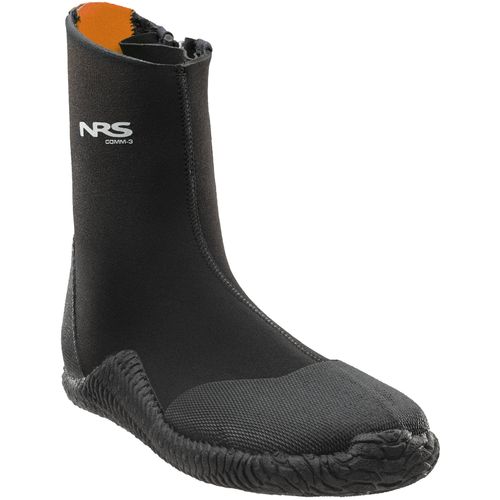
Before going back to the tent, I took pictures of Marvin and his family and a picture of a group of kids who had been on Marvin's computer. After the photo session, I walked back to my tent in a fine drizzle. The mosquitoes were out in full force, hunting for fresh blood. I tried to jump into the tent as quickly as possible but first had to remove my muddy Chota boots. While taking them off I discovered that one of the boots had a leak because my sock and foot were wet. By the time I got the boots off and was in the tent, about 50 mosquitoes had gotten in thinking that supper was about to be served. Little did they know that they had entered the Mosquito Morgue. Using my hands and even my baseball cap from NRS, I made short work of the mosquito mob. Blood and bodies were all over the place.


The Village Police Officer, Marvin, with family
members and friends. © Kenneth Urnes

I had not expected mosquitoes on this trip. In 1999 there were hardly any unless I walked back from the river into the forests. When Maija and I were on the river the following year we camped in beautiful grassy places. On the current trip, I would not have dared to do that. It would have been suicidal. The mosquitoes were even out in the middle of the river during the now brief nights, even in places where the river was a mile wide. In some places, if I breathed through my mouth, I ended up swallowing them. They were in my eyes and my ears. It was bad but not so bad for me that I would use a head net.

As I got comfortable in the tent and the sleeping bag, the rain began to fall harder. It continued through the night and into the early morning. At noon it was still raining slightly. It was then that I got up and left the tent to check on a couple of nearby shipping containers to see if they were empty. One of the containers had sheets of three inch thick wall insulation in it but rainwater was leaking through the top. The other was empty but the floor was slightly muddy. I stood there thinking about moving my tent into it to dry it out because we planned to leave at 6:00 pm if it was not raining. As the rain began to fall harder, I made up my mind. I moved two of the 4'x 8' sheets into "my" container, carried all of my gear into it and finally brought my tent in also. I hung it up to dry. Next I woke up Kenneth and told him where I was so that he wouldn't think I had abandoned him. He quickly got up and moved in with me into "my" container. Didn't even ask for permission. The rain continued to fall outside but we slept in peace and quiet and out of the rain. The Styrofoam sheets also helped keep us warmer.

At 4:00 we got up, cooked our meals while in the cargo container and packed our gear because it was no longer raining. We were on the river at 6:00 as we had planned. Our next stop would be Pilot Station. That's where Maija and I abandoned our attempt to reach the Bering Sea in 2000. I had talked her into going with me to complete the trip with promises of never paddling more than eight hours each day. I added that the trip would be done under sunny skies. Heck, I even threw the moon into the promises I made. She and I left from Harvey's house in Russian Mission at 9:00 am with an admonition from him that it might be hard to get out of the kayak due to muddy river banks caused by a late snow melt that June. I thought to myself, smugly, "What does Harvey know?"

Well, Maija and I paddled from 9:00 to noon, had a lunch on a rocky outcrop and then continued to paddle. Everything looked good. It was sunny and we had no problems getting out of the kayak for lunch. We got back into the kayak under blue skies and no wind. It was 1:00 in the afternoon. We paddled and paddled and paddled. It was not until 2:30 in the morning that I was able to find a place where we could get out. All the other times I tried to get out, I sank to my knees into the mud and would have gone deeper had I not clung to the kayak. We resumed our trip down the river after sleeping until 1:00 pm. Later in the afternoon rain began to fall. It fell nonstop until we got to Pilot Station the next day. We rented rooms above the grocery store in the village because the rain continued to fall. Self-preservation instincts caused me to suggest to Maija that we get off the river, fly to Anchorage, rent a car and tour for the rest of our vacation. We did that and because of that decision I am alive to tell the tale. When we got home, I called Harvey and Esther and they told us that it had continued to rain non-stop for the rest of the month, about 25 days.

The weather was decent as we left Marshall. Decent by now meant the wind was not blowing too hard, it was no too cold and most importantly, it was not raining. We made good time as we headed for Pilot Station. It took us only six hours to get there. A low sandbar on the river provided a good place to set up our tents. We were a short walk from the village and had it not been midnight, could have gone to do some shopping at the grocery store. While setting up the tents, a couple of guys, who we had seen on the river, came over and welcomed us to Pilot Station. They told us they had been goose hunting and had shot eleven speckled breast geese and several ducks.


Pilot Station, where the kids wanted to mess with
our stuff. © Kenneth Urnes

When the welcoming committee left, three curious kids came over to check us out. By then it was 1:00 am and I wondered why they were not home in bed. One of the kids, Regina (who seemed to be the spokesperson), was about 14–years-old and asked many questions of us. I did not feel like talking, so Kenneth dealt with them. Besides Regina there was a boy of about twelve who also questioned us and another girl who was quiet, asking nothing and hanging back on the fringes. Regina wanted to know if we were going to bed soon, when we would get up, what we had in the tents, if we were leaving anything in the kayaks and what time we would leave. I told her all of my things were in the tent and the kayak was empty. She then asked Kenneth the same thing. The rest of our answers became more and more vague due to the nature of the peculiar questions.

The quiet girl left, probably because she wanted no part of what the other two were planning. Regina and the boy walked past the tents, past the kayaks and stopped some distance from the tents on the sandbar point, away from the village. In the dusk ("night") it was hard to see them. They were like a couple of shadows against the river. I left the tent and went to the kayaks watching the two kids and making sure that they saw me watching them. I returned to my tent but looked in their direction before going in. Once inside, I turned on my light and sat waiting to see what would happen. The light was to let them know I was still up and awake. Soon the two tiptoed by casting a shadow on my tent wall and headed for the village. I stuck my head out so they could see I was watching. The shadowy figures disappeared between the buildings of the village. I slept peacefully.

When we got up early to leave, Regina and the boy came back but stood some distance from us. Apparently they figured we would be at the village store or sleeping. That would have allowed them to help themselves to our things. After watching us for a while as we packed, they turned around and walked back to the village without asking any questions or saying a word to either Kenneth or me.

We pushed off and had a long paddling day. At 8:00 we began to look for a cabin I had seen marked on my map. Soon we spotted the glinting metal roof of the cabin even though the sky was overcast. As we paddled to the steeply inclined bank, I could hear a chain saw going. After the chain saw stopped, I called out to the small, very small cabin. Soon two men appeared. One was close to 50, the other in his 60's. I asked if we could stop for the night at their fish camp. They both welcomed us and told us to come ashore. The younger man grabbed the loop on my bow line and pulled me and the kayak half-way out of the water so I would not have to step into the river.

When Kenneth and I were ashore and had secured our kayaks, I asked if they were staying in the very large, family-sized tent next to the very, very small cabin. My reason for asking was to see if we could stay in it and not have to set up our tents. I already knew they were not using the tent because smoke curled upward from the cabin's chimney. It worked. Pete, the younger one, said they were staying in the cabin and we could use the large family tent. We readily accepted the offer. The older man, Sonny, said once we had our things set up in the tent, we should join them for hot tea in the cabin.


Sonny and Pete’s cabin. The tent we
slept in was to the left.

Before we could put our sleeping pads, sleeping bags and cooking gear into the tent, we had to mop up three large puddles of rain water which had come in through the open windows. Pete provided a small pan to help us. I used one of my mop rags to wipe up some of the dirt from the floor. I told Pete it was just like at home for me—washing the floors. Pete said his wife would appreciate my cleaning job, especially when their grandchildren came to visit them at the fish camp.

Having finished with the cleaning and laying out of our sleeping bags, we went to have some hot tea. As I sat drinking my tea, I noticed several dead ducks on the floor. They were partially plucked. I asked Pete about them.

He said they were red eyes. I could not tell if they really were red eyes for they were quite dead and their eyes were closed. But, I believed Pete. As we talked, Sonny told us he had worked on barges on the delta for four years; first as a laborer and then as captain of a barge. That meant he had to pass navigation tests to do so. Sonny quit the barges after four years but the company kept calling him, trying to get him to come back and work for them once more. He just did not want to continue though.

Pete said he had also worked on the barges and had done so for many years. As a matter of fact, Pete began working on them at the age of fourteen. He said back then there were no child labor laws—at least not out there on the Yukon Delta.

Because it was getting to be late, we bid Sonny and Pete goodnight and went to the tent to prepare supper. As I left the cabin, I had to bend over to keep from banging my head because the door opening was no higher than five feet. Kenneth had to practically crawl out. I had brought in a piece of plywood into the tent which I had placed on the floor to keep my backpacker stove from melting the tent fabric as I cooked.

Rain began to fall during the night. I was happy I would not have to take down and pack a wet tent in the morning.

I had made dessert for supper. There was enough there for breakfast. It was my own Yukon Rice recipe: rice, dried fruit, nuts and sweetened condensed milk (I left out the diced Spam). I had it cold but washed it down with hot tea. The rest of the condensed milk, along with some tea bags, I gave to Sonny, Kenneth gave him a bunch of granola bars. Sonny was very appreciative for the things we gave him. We were very appreciative for the use of the tent. There sure are a lot of good people on the river.

Ray Zvirbulis

Show Low, Arizona
  • Sales, Offers, Trip Tales... Don’t miss out!    Sign-up for e-News
Shop Worry-Free. Safe. Secure. Trusted.
NRS - 2009 S. Main St., Moscow, ID 83843 - 877.677.4327 - Copyright 2012 - All Rights Reserved