From Sonny and Pete's fish camp, we had to cross the Yukon River to the south bank because the wind was driving down from the north. The crossing was very long, about two miles, and got to be rather rough because of the contrary wind driven waves. As we neared the channel to Emmonak, we had to cross the river once again. At that point, the river was only about a mile wide but the crossing was in very rough conditions. The waters did not calm down until we entered the channel to Emo (as the locals call their village).
As we got to the shoreline along the outskirts of the village, a man on a four-wheeler, with a woman on the back and a little girl in his lap, waved to us and yelled that there was a place to stop just past a large barge. He followed our progress along the shore and shouted that there was a small slough we could enter and easily land our kayaks. He was there when we arrived and introduced himself as Allan. He did introduce the woman and the girl but I did not write their names down. Just standing around making conversation, Allan said we could pitch our tents just across the twenty-foot wide slough. Allan seemed to be in his mid-to-late twenties and looked like a person one could trust. Kenneth and I did not want to paddle back the ten miles from the Bering Sea against the river's current. So, I asked him if he could pick us up on the coastline the following day once he had mentioned that he had a boat. Allan said he worked but could pick us up after work. That would be around 6:00 pm. Kenneth and I agreed to that and the three of us decided on the pick-up point after looking at both my map and Kenneth's.
When Allan left, another person came down to our tents. He wanted to know if we had any gear to sell. We did not but I told him he could have my leaky tent. He was not particularly interested. Heading back to his house, he told us if we needed drinking water or use of a phone, we could go to his place.
With the tents up, Kenneth left for a small cafe owned by a Korean woman. He was hoping for a Korean meal. I said I'd stay and keep an eye on our gear since I was leery of eating Korean food in a place like Emmonak. I figured it would be nearly impossible to get the ingredients needed for a proper Korean meal in Emo, That assumption turned out to be correct. Kenneth ordered something from the menu that sounded good. He was told they were out of it. He ordered another item. They were out of that too. Finally he ended up with rice, mushrooms and some sort of unidentifiable sauce. I, on the other hand, dined on gourmet sliced Spam on Pilot Bread al Fresco. Mmm! Mmm!
The following morning I went to reserve a room for us at the hotel. On the way, I also looked for a laundromat to use the bathroom since there were no suitably large bushes by the river. I stopped at the Emmonak Community Center to ask for directions and was told the laundromat did not open until 9:00. The lady who was cleaning said I could use their bathroom. It was disgusting. The last male to use it had not flushed the toilet. I held my breath, averted my eyes and hit the handle. Out of the corner of my eye I saw the water in the bowl, and its contents, rise to the rim, over the edge and flow to the floor. I told the cleaning woman what had happened. She rolled her eyes but continued with the task at hand. Standing there with my legs crossed I offered to take care of the problem if she would fetch a plunger. She quickly got one and I set to work—not easy while standing cross-legged. Then I asked for a bucket and mop so I could clean the floor so that I could use the toilet. She got that even more quickly. Soon the floor was clean. Fortunately I had brought my own toilet paper. Experience counts while in the wilderness!
Having taken care of business, and cleaned the bathroom, I asked the cleaning lady where the hotel was. She said it was upstairs and the room cost $95 per night. I hurried back to the tents and told Kenneth because I had not brought my money. He ran to the hotel and paid for the room and I paid him back $50. We carried our gear to the room. I left my empty tent standing in the cold.
Having sorted out my laundry I went to the laundromat (yes, here it was not called a washateria) to wash what needed to be washed. I did not want to be denied a seat on the plane due to dirty clothes. Because all the dryers were in use (all four, the rest were out of order) I got Kenneth and we walked to the grocery store to call the air service. The building was almost as large as the supermarkets back home. Anyway, we booked flights to Bethel with Grant Air at 9:30 on Friday, July 21.
Then we just hung out in our room and talked to three newly arrived kayakers. They were from Sitka and we had passed them on the river several times.
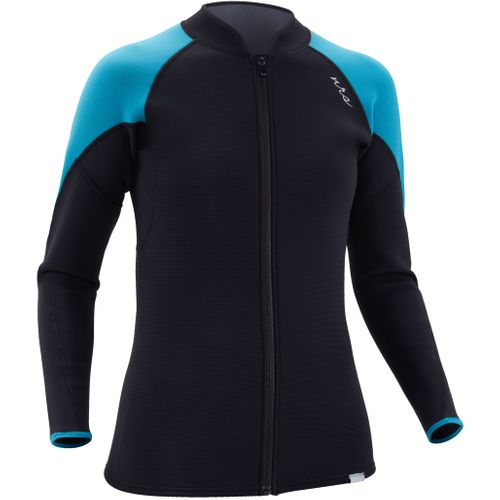
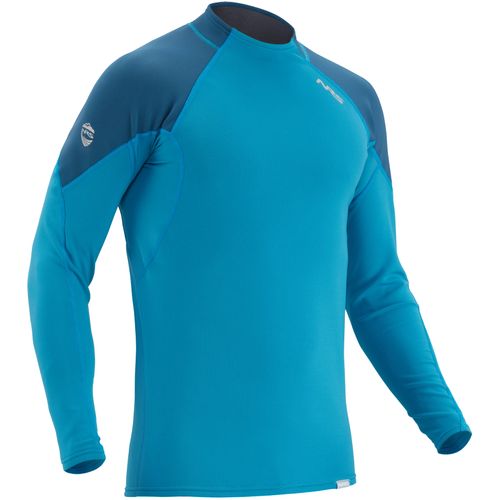
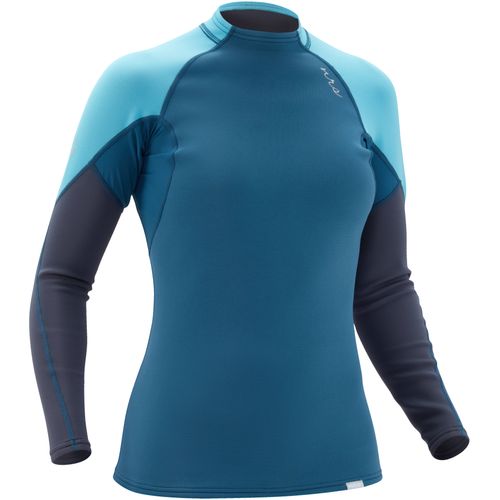
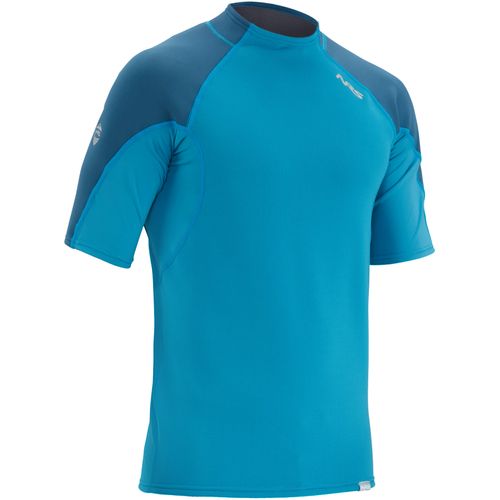
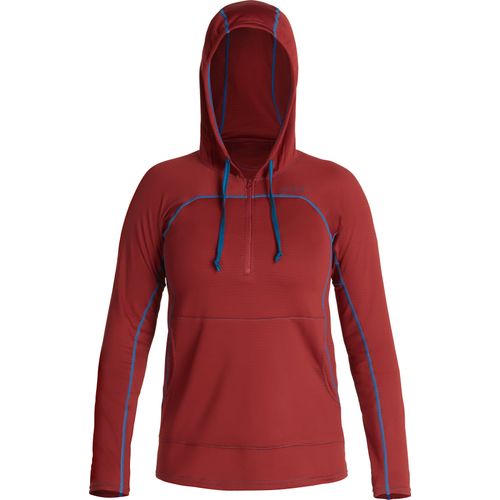
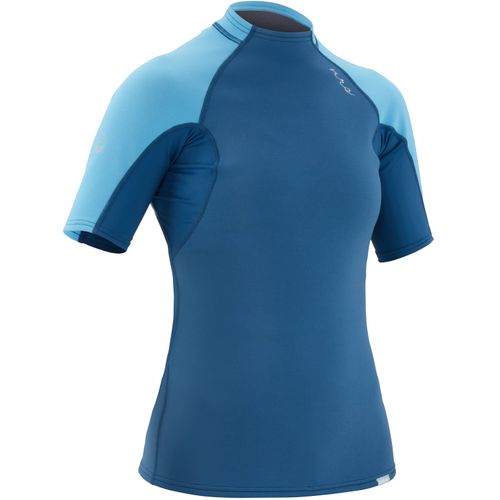
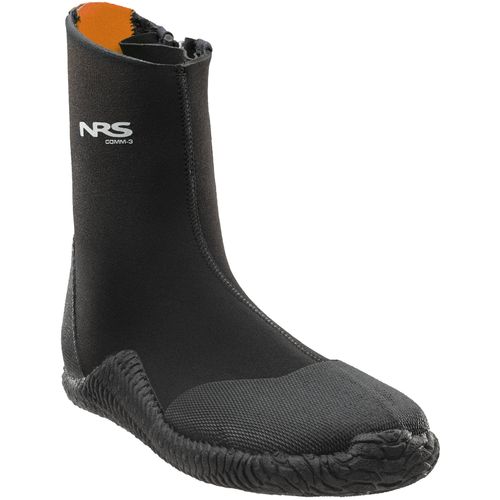
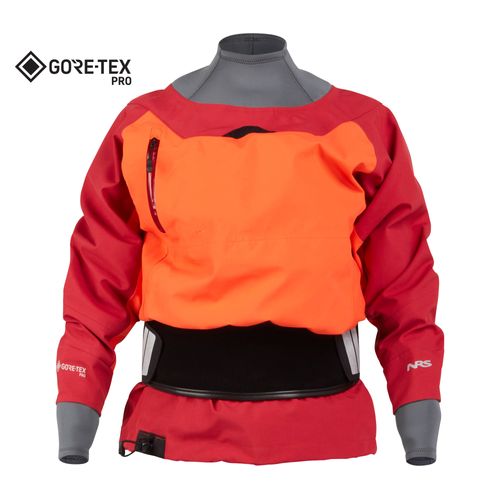
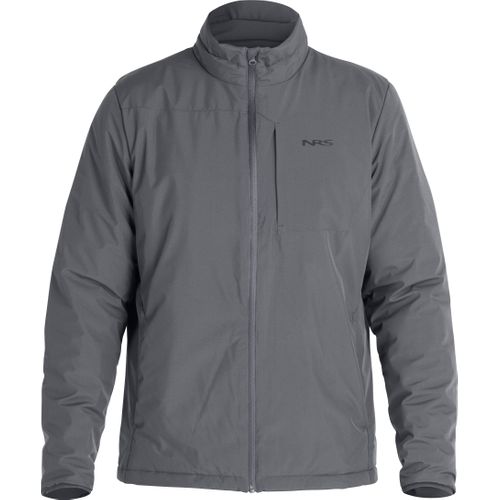
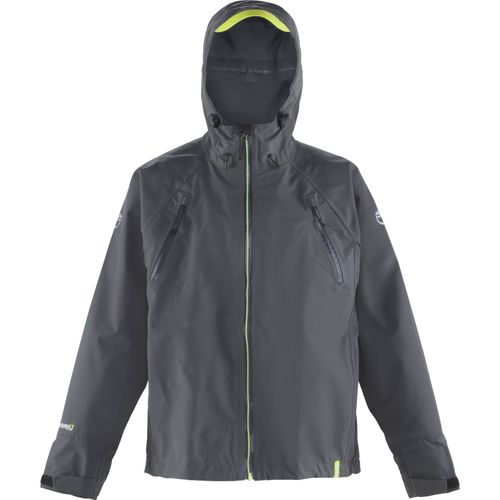
At 1:30 Kenneth and I walked down to the kayaks so we could paddle the last ten miles to the Bering Sea. Because of what several people had told me, those last miles could be very difficult. We gave ourselves four hours to cover the distance. As we readied our nearly empty kayaks, we saw that the two guys from England had just arrived. For some reason, both were wearing camo outfits. As I had mentioned earlier, they had started out from Whitehorse over one week before Kenneth had. Wimps! Anyway I put a small drybag with my camera, a can of fish and pilot bread into the kayak. Because it was cold, I wore my waterproof jacket over my NRS Mystery Shirt. | 
Ray by his kayak on the shore of the Bering Sea, wearing his NRS Mystery Shirt. “It sure was warm and dry.” © Ray Zvirbulis |
Pushing off into the slough we paddled out into the channel and found it to be quite calm. The waves were resting. It was quiet. After one hour, Kenneth looked at his map and said we were half-way to our designated pick-up point. The weather remained calm until we got to the pick-up point and remained calm while we waited for Allan. Oh, yeah, I got to the Bering Sea on Thursday, July 20.

Ray standing on a small island in the Bering Sea. Cold but happy at the realization of a dream. © Ray Zvirbulis | I built a fire both to keep warm and to let Allan find us more easily. I then took some photos of the Bering Sea. It was certainly not a let-down but there were no crashing waves shattering themselves into spray on rocky, ice covered shorelines. The calm waters of the sea reached to the horizon. Here and there were low-lying islands several miles from where I stood. At last I had reached the place I had been journeying to for so many years. At last I had accomplished one of my dreams. I felt good. |
Just as I was starting to have my meal of sardines and pilot bread, I saw a boat come out of the channel way off in the distance. It turned sharply in our direction and I knew it had to be Allan. Glancing at my watch I saw that it was only 4:00. I guessed he got off work early. That was great because it was beginning to get cold.
Then, when Allan had landed, (there was a kid with him (about 15 or 16 years old) we took pictures. I took some of the sea, of Kenneth, of Allan - then Allan took pictures of Kenneth and me and of just me. I had to have photographic proof that I actually was at the Bering Sea. During this photo session, Allan said he hoped to see a seal on the way back so he could try and harpoon it. I had thought harpooning had faded away long ago.
Allan took out a five-foot long harpoon with a float on it and a small, brass barb at the other end. He also showed me some spears and a throwing stick. The spears, or darts, looked like four-foot long arrows. They had feather fletching on the end and cord tied on the shaft and wound around it. Allan showed how the spear is positioned on the throwing stick. According to him every boat carried a harpoon and several spears plus a throwing stick. | 
Allan showing us his spear and throwing stick when he arrived to pick up Ray, Kenneth and their kayaks. © Ray Zvirbulis |
The photo session being over, we loaded the fully assembled kayaks into the boat and headed back at a much faster speed than Kenneth and I could manage in the kayaks. Allan was still talking about taking a seal. After 10 or 15 minutes Allan got a call on his radio that a seal had been sighted not too far from Emo. He gunned the motor and we leapt forward. By the time, we got to the location, there were three boats there already, cruising the channel, looking for the seal. Allan joined the search.
Soon the seal surfaced and everyone shot toward it in their boats. There were two people in each boat: the pilot and the person in the bow poised to throw either a harpoon or a spear. I grabbed my camera and began taking pictures as we bounced around in the boat. As Kenneth was getting his camera ready, one of the men in one of the other boats yelled, "No pictures! No pictures! Big fine!" Not wanting to be harpooned, both of us stowed our cameras. Later, as Kenneth and I talked, we speculated that the hunt was illegal.
As the boats dashed about, other boats joined us. Soon there were about seven boats playing bumper tag on the water. One of the spear throwers struck the seal with the barbed spear, much to my amazement for the boats were churning up waves across the channel causing them to bounce around. The seal dove but dragged the spear behind so everyone could see where it was headed. The chase was on in earnest. If a thrower missed, the spear or harpoon floated. The pilot steered the boat to the spear and the thrower snatched it from the water. All of the boats were milling around, jockeying for position in anticipation of the seal's resurfacing.
Finally, one of the throwers got a harpoon into the seal from a distance of about forty feet. The seal was still very much alive, but badly wounded. It couldn't dive because the harpoon float kept it above the surface. Three boats closed in and somebody grabbed the seal by the tail while a second person shot it. Somebody had to hold it, otherwise the dead seal would have sunk because the hunt had taken place in fresh water. In salt water, ten miles offshore, the hunters use a rifle rather than a harpoon or spear because the seals float in salt water when dead.
I asked Allan who gets the seal. He told me it was the person who harpoons it. The young man in Allan's boat did manage to strike the seal with his harpoon but it did not hold. Allan thought it was because the barbed point was not sharp enough. The two of them were going to sharpen the barbs on the spears and the harpoon when they got home.
All that was an exciting feature at the end of my 2,300 mile, 44 day, Yukon River trip. I was part of an Eskimo seal hunt, and even managed to take some pictures of the whole thing.
After Allan brought us back to our tent site, Kenneth and I each gave him $20. Kenneth also gave him his life jacket and I decided to give Allan my tent rather than to the other person. Allan thanked us several times for he had neither asked for nor expected to get anything from us.
We carried our kayaks to the Community Center/hotel and managed to get them into the building. No one objected because everyone had gone home since it was after 5:00. Once we had them inside we disassembled them, cleaned them and packed them away. My next job was to pack the rest of my gear into my dry bags. I was able to get everything into two dry bags. So, I had three bags to deal with. Kenneth had one huge bag which held his kayak. It was almost as tall as I was. He also had a backpack and a carry-on bag. It was only after everything was disassembled and packed that I went to take a shower. My goal was to avoid sweat once I was clean.
Thursday evening, everything was packed and I was ready for the flight home. My clothes were clean, my gear was clean and I was clean. As I lay in bed, it seemed the temperature was rising so, to avoid sweat, I opened the window to let in some cool, fresh air. Fortunately, our window had a screen, for soon there was a mass of gray, hungry mosquitoes trying to force their way through the screen and into the room. My mean streak emerged at that point. I held my bare arm a hair's breadth away from the screen and drove the mob mad.
The room next to us was occupied by the threesome from Sitka. They were having a miserable time. Their room was also too warm and when they opened their window, a swarm of maddened mosquitoes surged in and engulfed them. After closing the window, they spent the night slapping themselves and slapping the walls in an effort to slap down the mosquitoes. Because the walls were not soundproof I could hear them thrashing about.
The previous day, I had talked to Ralph Redfox and made arrangements with him to pick us up at the hotel and take us to the airport. Some other character had said the airport was five miles out of town. I was not about to carry my bags that far. A portage to the airport was not in my plans. Kenneth had wanted to walk there but I told him I would not do so. He decided to join me. I called Ralph early that morning to confirm the pick-up time and he said he would be at the hotel. When he arrived, I told him about the other person’s comment that the airport was five miles away. Ralph just laughed and said that it was only about one mile. I paid him $5 for the ride and hauling our gear.
At the airport the bags, as well as the passengers, were weighed. I saw that on this trip I had lost only a few pounds.

Flying over the tundra between Emmonak and Bethel, Alaska. © Ray Zvirbulis | The ten-passenger plane climbed quickly from the runway and Emmonak was soon out of sight as we banked toward Bethel. It is one of the hubs where small planes fly in so that passengers can catch the Alaskan Airlines jets to Anchorage. Below me the tundra stretched to the horizon. Its varying shades of green, from dark olive to bright green, are broken up by innumerable lakes, ponds, streams and rivers. The streams and rivers wound back and forth with no apparent direction. They twisted gracefully back on themselves. Truly a maze of immense proportions. |
My journey had come to an end. I bid the Yukon River and Alaska a fond farewell. But lurking in the dark recesses of my heart was a still, small voice whispering a familiar message, "You will return."
An addendum about flying with camping gear: When I flew to Juneau on Alaskan Airlines there was no problem taking my empty fuel bottles for my Whisperlite Stove in my luggage. But at the Bethel airport, they refused to let the empty fuel bottles on to the plane. After arguing and reminding them that their airline had allowed them on the flight to Juneau, and demonstrating that they were indeed empty, they still would not let me take them on the plane. In exasperation I took the two aluminum bottles and gave them to Ted, one of the locals sitting in the waiting area. They did let me take the pump out of the one bottle and take it on board.
When I got home I sent an email to Alaskan Airlines explaining what had taken place. They reimbursed me for the fuel bottles and gave me a $50 discount coupon on my next flight on Alaskan Airlines. I then sent an email to MSR telling them of the incident. They were not surprised saying that bottles, fuel pumps and stoves had been confiscated from other travelers. | 
Ray, with his wife Maija, home again after 51 days of Yukon River adventure. © Ray Zvirbulis |
Having seen aluminum water bottles in outdoor gear shops, and noticing that they were blue in color, I decided that if I were to fly again with my camping gear, I would sand off the red color from the MSR bottles and paint them blue. I think I would label the stove as a solar powered water purifier.
Questions and comments about my trip(s) can be directed to Clyde (especially if they are aggressive, antagonistic and nasty) since he allowed me to tell the tale on the NRS site. Thanks Clyde.
Ray Zvirbulis
Show Low, Arizona