Email To Friend
| |

Grand Canyon GigaView
A Virtual Tour of America’s Premier River Trip


Three years ago, I found myself at the rim of the Grand Canyon with a new type of 360-degree video camera, recording the experience of being on the Grand Canyon Skywalk on its opening day, for the media. I wasn’t invited to the event like everyone else who was there. I didn’t have a press pass. My colleague and I did not fly into the SkyWalk’s impressive new airstrip from Las Vegas. We had driven a VW Beetle over a 14-mile, unimproved desert track to get there, but we were welcomed for our efforts. The event was a detour from our day job of driving city streets with a 360-degree video camera on a project that would eventually spawn Google Maps Street View. Standing there on the South Rim of the lower Canyon, looking at the river down below, I knew I was in the wrong place for the right shot. As a former expedition raft guide, I knew that the 360-degree view I really wanted to shoot was at the river level, three-thousand feet below.

In Utah, Colorado, West Virginia, Texas and Alaska, I have been privileged to visit some of America’s hardest-to-reach natural features through river trips. One of my favorite things to do on a slow day on the river was to spin my boat slowly with my oars to give clients a 360-degree view of the river corridor. When I was introduced to 360-degree camera techniques, I immediately wanted to employ them on a wilderness river so those less fortunate than my guests and I could have an idea of the experience available on the river. While driving up and down various city streets, day in and day out, one of the ideas that kept me going on the road for Google Maps Street View was that one day, I would have the chance to combine my passion for river running with my fascination for 360-degree imaging.

Thomas on the South Rim of the Grand Canyon, with the Google Maps Street View camera. © Thomas Hayden

When around Christmas time, through the miracle of Facebook, an old guiding buddy sent out the invitation to join him on a Grand Canyon private trip. I was the first to commit. I had done the trip in 2005 and told myself then that if I ever had the opportunity again, I would jump at the chance. The only problem was: how could I afford it? Not that it’s that expensive; it’s the cheapest vacation I can think of when strictly considering quality and quantity versus cost. My issue was that I was in the middle of starting up a new travel industry media venture (www.SlopeViews.com) and my personal funds were severely taxed. I had to find a way to turn this challenge into an opportunity. 

I thought back to my 2005 Grand Canyon trip, when we had launched only a month after I had been introduced to 360-degree imaging while working for a technology investor in Anchorage, AK. Almost every time someone would take a picture, they would sigh and say the same thing I had been hearing for years in river canyons: “You just can’t get it all in a photo.” I would think to myself, “I know a camera that can get it all.” 

I considered my options for creating a project that would justify three weeks away from my work while on this Grand Canyon trip. I looked into the legalities and logistics of bringing a 360-degree video camera down the river to capture a Google River View-like experience. I knew I would need an entire boat full of hard drives and specialty batteries at a cost of $20,000 at the minimum, but I also knew that SlopeViews’ camera would be needed for paying projects while I had it on the river.


Thomas making adjustments to the GigaPan Epic 100 set up, while taking practice shots before leaving for the Grand Canyon. © Thomas Hayden
I had been learning about a new company that had developed a product based on NASA technology from the Mars Rover Expeditions that would allow photographers to use their own cameras to create enormous images with incredible depth of view. The GigaPan robotic imager takes a series of tightly zoomed pictures to be stitched into a larger panoramic. It can also rotate 360-degrees around its axis to create the spherical images that I have been so fascinated by.

Compared to more complicated, less precise, and lower resolution solutions for 360-degree still imaging, it is better, cheaper and easier. Moreover, it runs on AA batteries, not a proprietary lithium ion that requires recharging. Recharging by either solar or wind is not a dependable option for the amount of shooting I wanted to do in the Canyon.

Best of all, the GigaPan Epic 100 works with my Canon PowerShot S5 IS camera (that also conveniently runs on AA batteries). Once set up, the robotic imager shoots incredibly precise pictures that the GigaPan Stitching Software easily combines into a large mosaic image for a remarkable user experience. With GPS coordinates, the images can even be uploaded to Google Earth in the GigaPan layer and explored in the context of their location. It is the perfect balance between my ambition and my abilities and, as boaters everywhere know, that is an important ratio to get right on a river trip. I had found a logistical solution, but there was still the issue of cost and cash on hand.  Budgets are tight for everyone. I decided to take a leap of faith and invest all of my resources into a GigaPan project for this trip, and that would mean I would be returning to an uncertain financial situation at the end of it.

It can take anywhere from ten minutes to four hours to shoot a 360 image, depending on how far you zoom in optically for each shot. If my zoom is wide open, then it only takes five or ten minutes. It does require a full set of six AA batteries to do just a small shot like that of 84 photos. A full zoom 360 might be as many as 2400 photos. The robot shoots series of columns and rows, but you can set the order of shooting. If I want to catch rafts coming downstream, I will set it to shoot the bottom row first moving upstream with the rafts. The running order of the rafts will end up being spread out a little, but no raft will have its picture taken twice.

Because our rafting permit is “non-commercial”, by definition, Grand Canyon GigaView must be a not-for-profit venture. I will not be selling my images or any media produced while on the river. My efforts are simply to share my experience in America’s premier natural wonder with anyone and everyone, for free. I do hope to set a new standard for virtual tourism and, maybe later, build on my career by improving that standard.

When my neighbor showed me Kickstarter.com and their innovative funding platform that leverages social media to spread the word about creative projects and provides an easy click-through process for people who want to “back” a project like mine, I applied for acceptance immediately. Three hours later, I received a very friendly email from the Kickstarter staff in Brooklyn, NY accepting my project for their site and offering suggestions about how to make my proposal more attractive. I wrote a script for a pitch video and shot it the next day while sitting on my neighbor’s raft in the middle of our street. My other neighbor, Harris Porter, a brilliant young video producer, did the shooting and editing in less than 24 hours.

A still shot from the Kickstarter video that Thomas used to raise the funds for his GigaView project. © Thomas Hayden

With a shiny new pitch video, I launched my Kickstarter.com project with the goal of raising $2500 (about half of what the project costs would be) with a deadline just 18 days away. I abused my social networks. I over-tweeted. I asked my Facebook friends, not to contribute themselves, but to share my project with their wider networks to spread the word about my project. The response was enormous and fantastically humbling.  Complete strangers from New York and Los Angeles were the first to pledge money within minutes. Family members gave way too much because they are awesome.  Friends were extraordinarily generous. Business associates who have become friends backed me. Friends of friends began spreading the word and soon almost a thousand people had watched my pitch video.

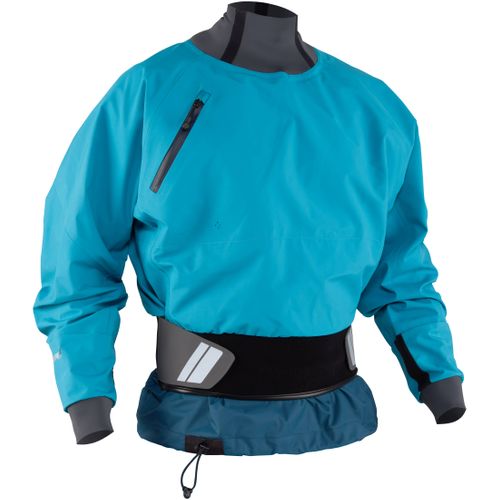
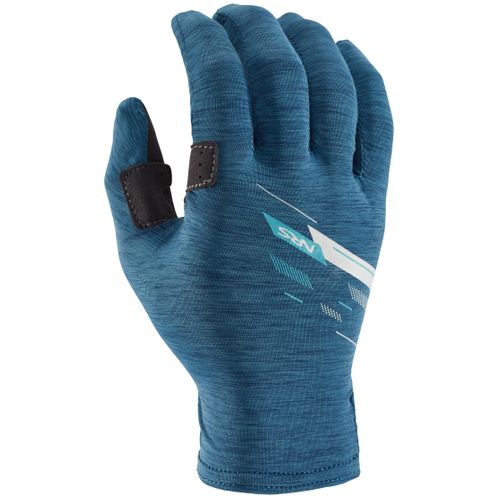
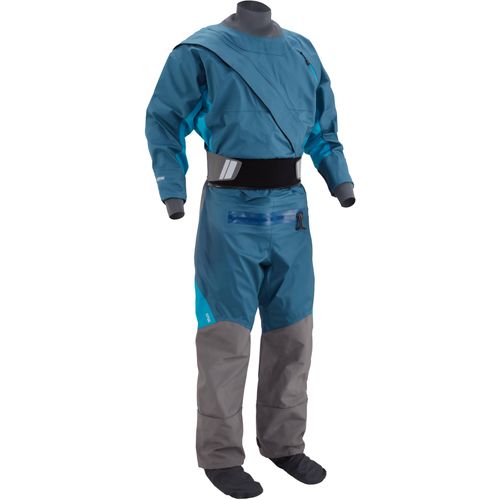
Backer pledges came in by the hour. Kickstarter.com staff contributed and even put me on their home page as “Project of the Day” over an entire weekend. One friend who wanted to hire me last year for 360 video work, but couldn’t, became my first corporate sponsor. One of my favorite brands (NRS) returned my cold call with enthusiasm, offered me some much needed gear, and pushed me over the funding finish line ten days before the deadline by becoming my second corporate sponsor. Other gear companies asked me to test new products while in the Canyon. As I write this, with 61 hours to go on the Kickstarter fund-raising drive, Grand Canyon GigaView is 135% funded and I am eternally grateful to each and every person who contributed.


Condors soaring above the Canyon walls in 2005. © Thomas Hayden
So, the dry bags are almost packed, as are the Pelican cases, ammo cans, stuff sacks and Camelbacks. The granola still needs to be baked and bills still need to be paid, but we are almost ready to leave Portland for the two-day drive to Flagstaff. I’ll be receiving location requests from NRS Newsletter subscribers right up until the good people at PRO (Professional River Outfitters) pick us up to take us to Lee’s Ferry. The last time I pushed off from that bank and headed downstream, our party was greeted by six California Condors circling over Navajo Bridge. I have a feeling this time will be even more significant for me personally, and I hope I can provide a unique view of the experience for the world to enjoy. 

Look for my trip report in the late April issue of this newsletter. Grand Canyon GigaView will hit GigaPan.org’s incredible library of exploratory images and Google Earth sometime this summer. 

Thomas Hayden
Portland, Oregon

From the July 7, 2010 Vol 1 Newsletter:
Check out the Grand Canyon GigaView Virtual Tour
  • Sales, Offers, Trip Tales... Don’t miss out!    Sign-up for e-News
Shop Worry-Free. Safe. Secure. Trusted.
NRS - 2009 S. Main St., Moscow, ID 83843 - 877.677.4327 - Copyright 2013 - All Rights Reserved